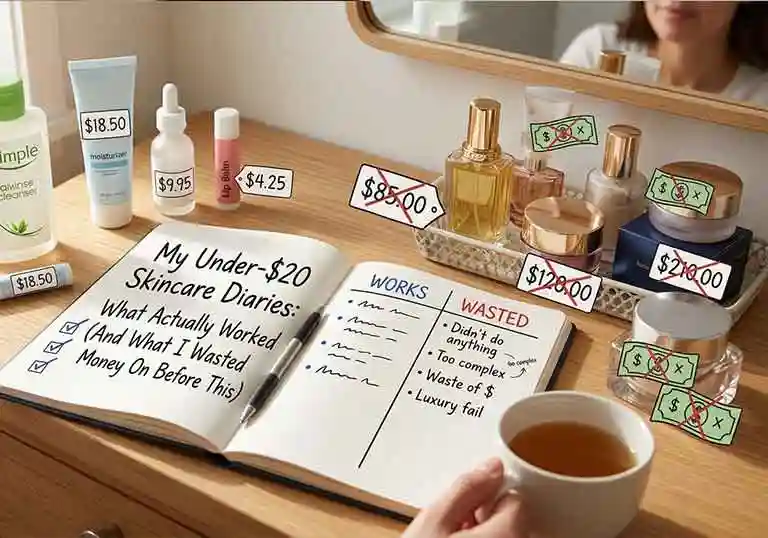
I started this skincare experiment because I was tired of spending too much money on products that looked impressive on the shelf but did not necessarily make a noticeable difference to my routine.
My old moisturizer had run out, and when I saw the price—about $46 for one jar—I decided not to repurchase it. Instead, I challenged myself to build a more affordable routine with a simple rule: no single skincare product would cost more than $20.
Over the next month, I tested a handful of budget-friendly products and learned something I probably should have realized years ago: an effective skincare routine does not always need to be expensive.
Here is what actually worked for me, what surprised me, and what I would do differently next time.
Week 1: The Cleanser Swap
I started with the most basic step: cleanser.
My skin has always been somewhere between combination and oily, so I chose the CeraVe Foaming Facial Cleanser, which I found for around $14.
I was skeptical. I had tried expensive foaming cleansers before that left my skin feeling tight and stripped, so I expected the same thing from a cheaper option.
Thankfully, that did not happen.
My skin felt clean without that uncomfortable, overly dry feeling I had experienced with some other cleansers. The formula also contains ingredients such as ceramides and niacinamide, which made me more interested in learning what different skincare ingredients actually do.
By the end of the first week, my biggest takeaway was simple: a cleanser does not need to be expensive to feel good and fit into a daily routine.
Week 2: Adding a Niacinamide Serum
This was the week I started overthinking everything.
I kept hearing about The Ordinary Niacinamide 10% + Zinc 1%, so I decided to give it a try. At around $8, it was easily within my budget and seemed like a low-risk experiment.
The first few days were uneventful. I did not suddenly wake up with dramatically different skin, and I think that is worth mentioning because skincare marketing can sometimes create unrealistic expectations.
After a couple of weeks of consistent use, however, I felt that my skin looked a little less shiny around my nose and that my overall complexion appeared more balanced.
Was it a dramatic transformation? No.
Did I enjoy using it enough to keep it in my routine? Absolutely.
That became an important theme throughout this experiment: small improvements can still be worthwhile when a product is affordable and easy to use consistently.
Week 3: The Hydration Realization
Next came The INKEY List Hyaluronic Acid Serum, which cost around $10.
This was probably the step that changed how I thought about skincare the most.
My skin had started feeling slightly tight, partly because I had introduced several new products in a short period of time. I realized that I had been thinking about “actives” and treatment products while overlooking something much more basic: hydration.
I also discovered that I preferred applying the serum to slightly damp skin, following the product’s directions, rather than applying it to completely dry skin.
Once I adjusted how I used it, my skin felt more comfortable and looked a little more plump.
It was not a dramatic overnight result, but it made my routine feel more balanced.
Week 4: The Moisturizer That Changed My Mind
For moisturizer, I chose CeraVe Moisturizing Cream, which came in at around $17 depending on the size and retailer.
This was probably the product that made me question my previous spending habits the most.
The cream felt rich without being uncomfortably greasy, and it layered well with the other products I had introduced. I started using it consistently in both my morning and evening routines.
By the end of the month, my skin looked calmer and more even to me.
I am not calling it “glass skin,” because that is not a realistic standard I want to chase. I was simply happy that my skin looked healthy, comfortable, and cared for.
And honestly, that was enough.
The Sunscreen I Almost Skipped
Sunscreen used to be the easiest step for me to ignore.
Sometimes the texture felt heavy. Sometimes I disliked the finish. Other times, I simply forgot to apply it.
For this experiment, I bought a lightweight drugstore sunscreen and made one small lifestyle change: I kept it next to my toothbrush.
That tiny change helped more than I expected.
Instead of relying on motivation, I made sunscreen part of something I already did every morning.
The bigger lesson was that the best skincare product is one you can actually use consistently.
For daily sun protection, dermatology guidance generally recommends a broad-spectrum sunscreen with SPF 30 or higher. (American Academy of Dermatology)
What Actually Worked for Me
After four weeks, a few things became very clear.
1. The order mattered
My routine became much easier once I stopped applying products randomly.
My basic order was:
Cleanser → Hydrating Serum → Treatment Serum → Moisturizer → Sunscreen in the morning
The exact order can vary depending on the products you’re using, but establishing a consistent routine helped me understand what I was actually applying and when.
2. Consistency beat price
This may have been my biggest lesson.
I used these affordable products almost every day because the routine was simple and the products were easy to replace.
Meanwhile, some of my more expensive products had spent months sitting half-used in a drawer.
A cheaper product that you use consistently can be more useful than an expensive product you rarely use.
3. I probably never needed such a complicated routine
My skin did not need a shelf full of products.
It needed the basics:
Cleanser. Moisturizer. Sunscreen. One or two targeted products.
That was enough to create a routine that felt manageable.
What I Wasted Money On Before This
Looking back, I think I spent too much money on products simply because they looked luxurious.
Packaging, branding, texture, and a higher price can make a product feel more effective, but price alone does not guarantee that something will be the right choice for your skin.
This experiment did not convince me that expensive skincare is always a waste of money. Some premium products may be worth it for particular formulations or preferences.
What it did teach me is that affordable skincare deserves more attention than it sometimes gets.
My Under-$20 Skincare Routine
The products I tested came to roughly $65 for the routine, depending on product size and where they were purchased.
My basic routine looked like this:
Morning
- Gentle cleanser
- Hydrating or treatment serum
- Moisturizer
- Sunscreen
Evening
- Gentle cleanser
- Serum
- Moisturizer
I am deliberately keeping things simple for now.
I do not want to add five new products just because I have finished one skincare experiment.
Final Thoughts
My biggest lesson from this budget skincare routine was not that expensive skincare is bad or that every inexpensive product will work for everyone.
It was that skincare does not have to be complicated to be effective for you.
A simple routine, products that suit your skin, and consistent habits can matter more than chasing every new product launch.
For now, I am sticking with what works, spending less, and resisting the urge to fill my bathroom shelf with products I do not actually need.
And that, honestly, feels like a pretty good skincare result.
Skin can react differently to products, so introduce new products gradually and stop using anything that causes significant irritation. For persistent or concerning skin problems, consult a qualified dermatologist or healthcare professional.