Hard water is a daily reality for millions of people, and if you think you’re safe because you’ve never noticed it, you may be wrong. Tap water isn’t simply “chlorinated or hard” — it can be both, and it can carry plenty of other things too.
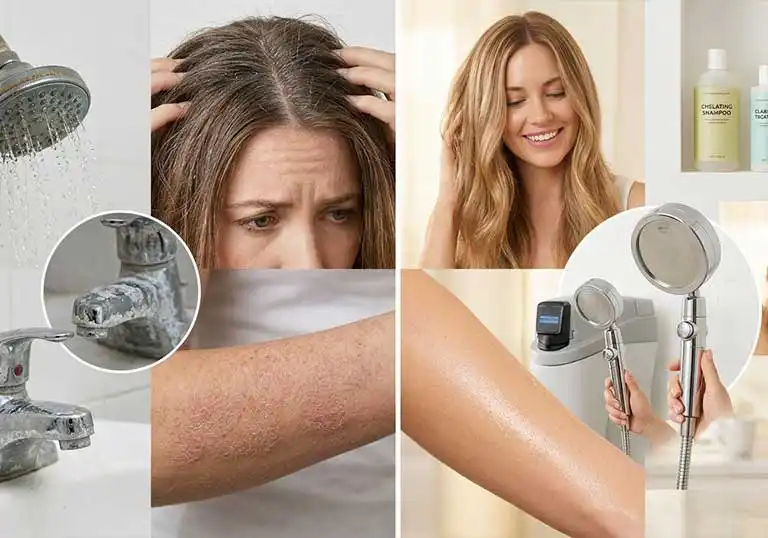
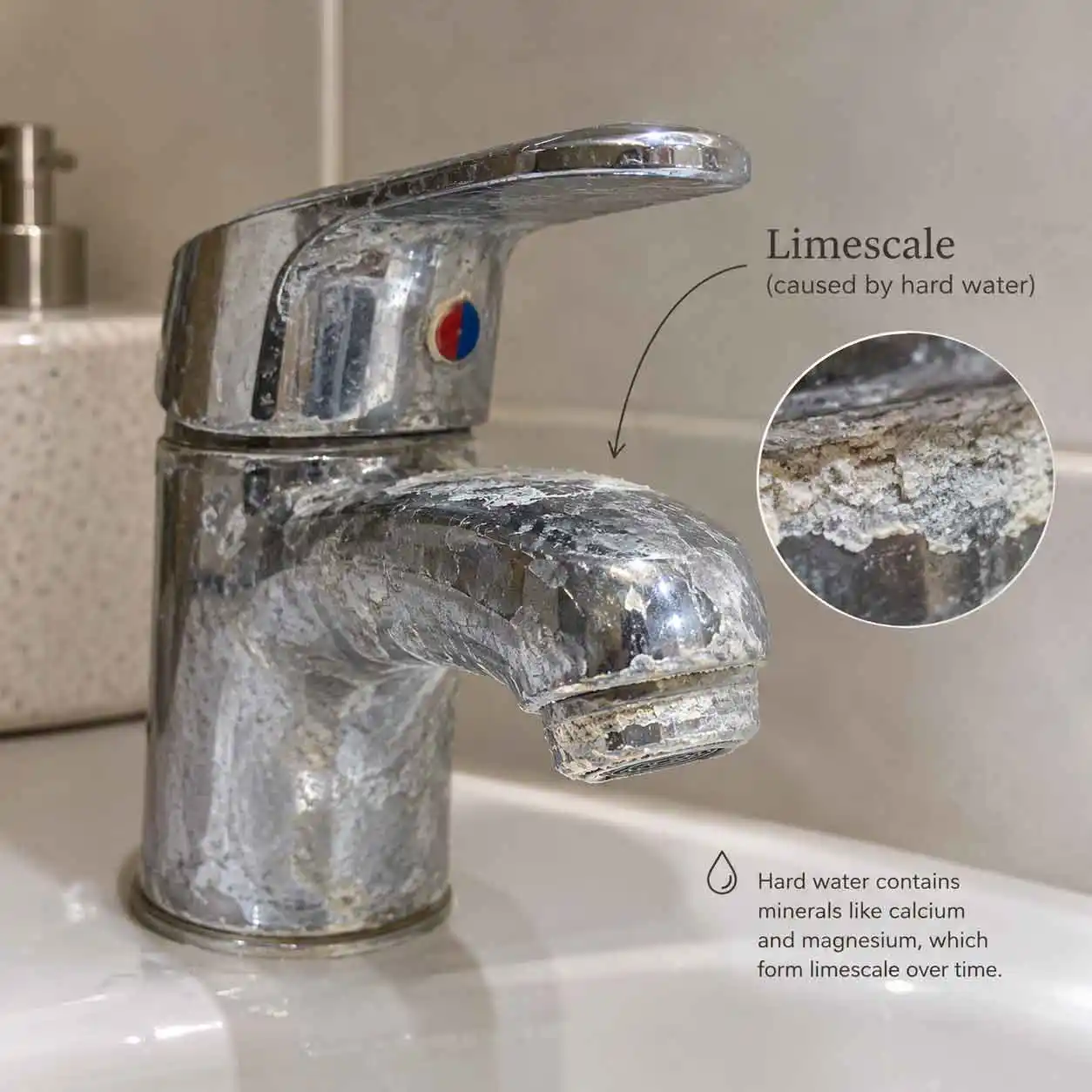
So what exactly is hard water? It’s water with a high concentration of dissolved minerals, mainly calcium and magnesium. You can often see the proof in your own bathroom: white, crusty deposits on taps, cloudy shower screens, and spotty glass. If that’s what hard water does to metal and glass, imagine what daily contact might do to your skin and hair.
Here’s the important part. If you’ve spent a lot of money on skincare and haircare and still see dryness, irritation, or dullness, your water could be one of the factors working against you. Hard water isn’t the only possible cause of breakouts or hair problems, and it isn’t proven to cause hair loss, but it’s a commonly overlooked variable worth checking before you buy yet another product.
Quick Answer: Does Hard Water Really Affect Skin and Hair?
- Hard water is high in dissolved calcium and magnesium — tell-tale signs are limescale on taps, poor lathering, and a residue on skin or hair after washing.
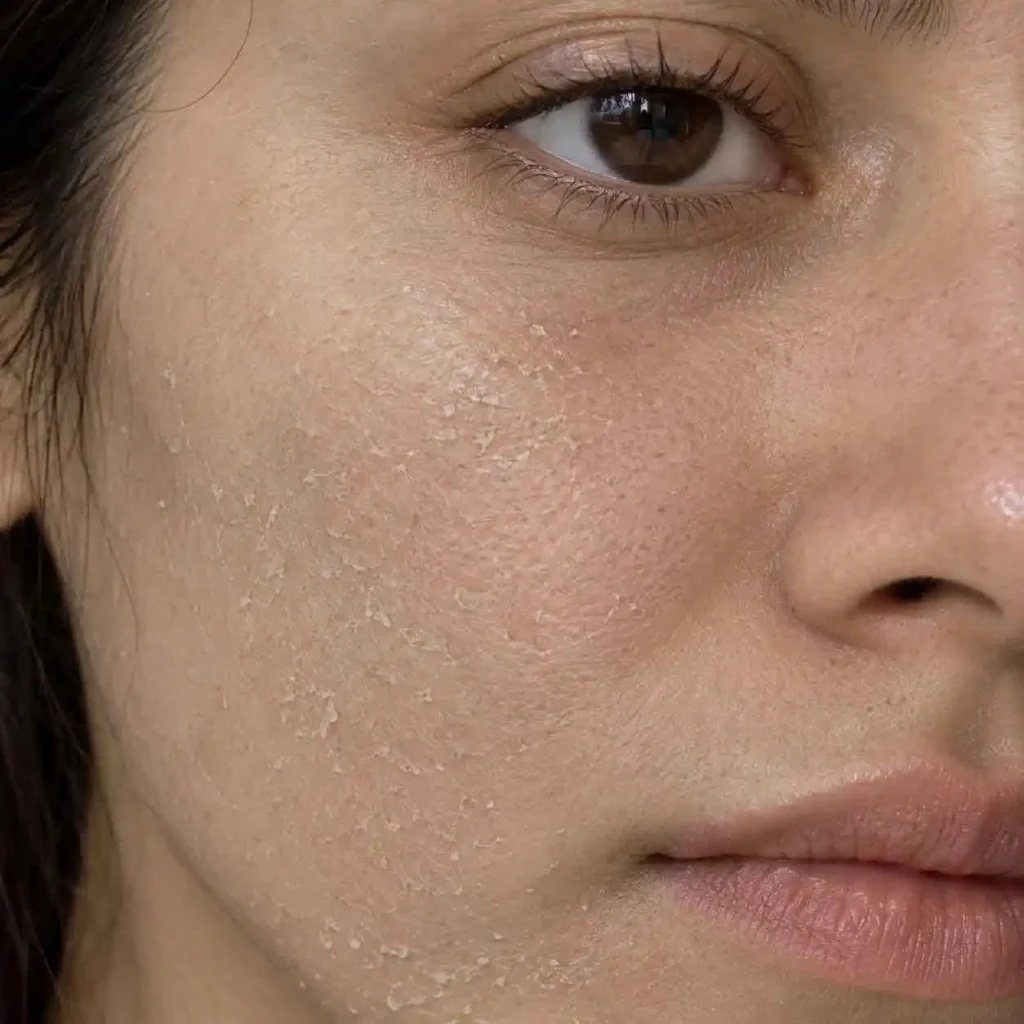
- On skin, mineral buildup can disrupt the barrier, leading to dryness, flaking, tightness, and redness.
- On hair, it coats strands in minerals, causing dullness, frizz, tangling, and faster breakage.
- It’s not proven to cause hair loss — it mainly damages the hair shaft, not the follicle.
- A whole-house water softener is the most complete fix; a chelating shampoo and a softer final rinse are the easiest ways to manage it day to day.
What Is Hard Water?
Hard water is something we tend to ignore, as if it were no big deal. It’s water rich in minerals, mostly calcium (Ca²⁺) and magnesium (Mg²⁺). Depending on where you live, it may also carry traces of iron, manganese, strontium, and other minerals.
Water hardness is usually measured in milligrams of calcium carbonate per litre (mg/L). A commonly used scale looks like this:
- Soft: 0–60 mg/L
- Moderately hard: 61–120 mg/L
- Hard: 121–180 mg/L
- Very hard: over 180 mg/L
Hard water is generally considered safe to drink. The concern here is how it behaves on your skin and hair when you wash with it every day.
Signs your water may be hard
- White or chalky limescale on taps, showerheads, and kettles
- Soap and shampoo that don’t lather well
- A film or residue left on your skin or hair after washing
- Spots on glasses and dishes
- Clothes that feel stiff or dull after washing
How Hard Water Can Affect Your Skin
We talk endlessly about skincare ingredients and routines, but we rarely talk about one variable we use on our face every single day: water.
Sometimes we do everything right — follow a good routine, wear sunscreen, eat well — yet our skin still feels dry, tight, or irritated. Here’s why water may be part of the picture:
- Calcium and magnesium react with soap and some cleansers, leaving a thin film on the skin instead of rinsing away cleanly.
- Hard water tends to be more alkaline than the skin’s naturally slightly acidic surface, which can disturb the skin barrier.
- This can show up as dryness, flakiness, tightness, and redness.
It’s easy to assume you have “sensitive skin” when your skin is actually reacting to something in its environment, and water can be one of those things. That said, hard water isn’t the only reason for dryness or breakouts, so it’s worth looking at your products, climate, and habits too.
Some research has also linked hard water exposure with a higher risk of eczema flare-ups, especially in children, though the evidence isn’t fully settled. If you or your child has eczema or another skin condition, speak to a dermatologist rather than relying on water changes alone.
How Hard Water Can Affect Your Hair
Many of us have spent a fortune on shampoos, conditioners, and serums, and they still don’t work as well as promised. Before buying another product, check your taps and shower for that white buildup. If it’s there, you’re most likely washing your hair in hard water.
Hard water can affect hair in several ways:
- It can leave a thin layer of minerals on the scalp and hair strands, making hair look dull, rough, and frizzy.
- Hair can become tangly, which may lead to more breakage.
- Colour-treated hair may fade faster.
- Mineral buildup can stop conditioners, masks, and oils from working as well as they should, because they sit on top of the residue instead of coating the hair evenly.
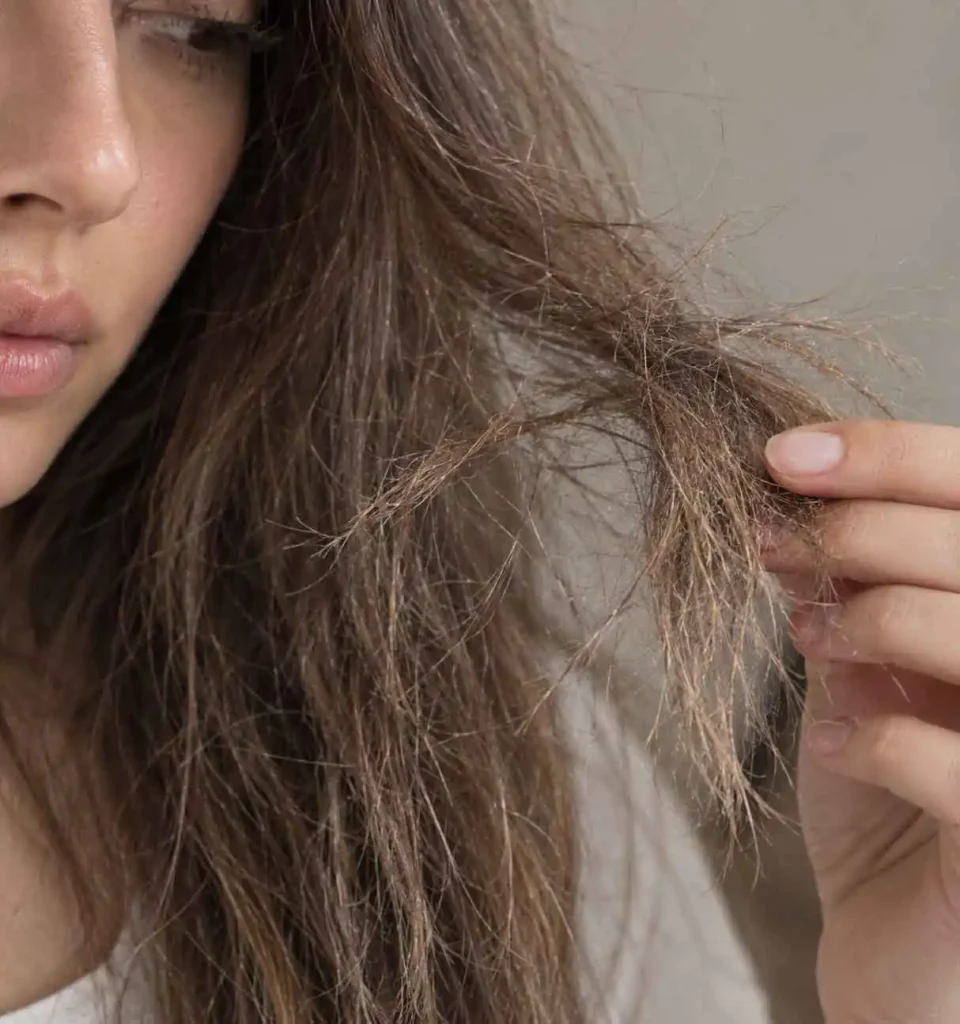
Importantly, hard water mainly causes breakage and damage to the hair shaft. There’s no solid evidence that it causes hair loss from the root. If you’re shedding a lot of hair, please see a doctor or trichologist to find the real cause.
How to Protect Your Skin and Hair From Hard Water
There are several ways to protect your skin and hair from the buildup and harshness of hard water. Some fix the problem at the source, and others just manage it.
1. Water softener (whole-house)
This is the most complete solution. A water softener uses ion exchange to swap calcium and magnesium for sodium, and it’s installed where water enters your home, so it covers every tap. It’s a significant investment and needs regular maintenance (salt or resin regeneration), but it protects your skin, hair, pipes, appliances, and laundry.
Important: an ordinary water filter, such as a basic carbon or sediment filter, does not remove the minerals that cause hardness. Look specifically for a water softener or a system rated to reduce hardness.
2. Shower head filter
A more affordable option for people who rent or can’t install a whole-house system. Some shower filters reduce chlorine and certain minerals, but their effect on hardness varies by product and the evidence is limited. Treat it as a partial helper, not a guaranteed fix, and replace cartridges as directed.
3. Chelating or clarifying shampoo
A clarifying shampoo removes product and scalp buildup, and a chelating shampoo is specially made to bind and remove mineral deposits from hair. These are stronger than regular shampoo, so use them once a week or every couple of weeks, not daily, and follow with a good conditioner. If your hair is dry or colour-treated, start with once every two weeks and see how it feels. Clarifying shampoo may ease itchiness or flaking caused by buildup, but it won’t cure dandruff, which has other causes.
4. Rinse with cleaner, softer water
If your tap water is hard, you can use filtered or softened water for your final rinse. For your face, you can rinse with drinking water from a jug or bottle. Bear in mind that bottled water isn’t automatically soft, because some brands are quite mineral-rich. Check the label for mineral content, or choose filtered, distilled, or demineralised water. Using bottled water for your whole body or hair is expensive and creates plastic waste, so many people reserve it for the face or a final hair rinse.
5. Protect your skin barrier
Whatever you do about the water, support your skin: use a gentle, low-pH cleanser, apply a moisturiser straight after washing, and avoid over-exfoliating. Pat your skin dry instead of rubbing.
A note on alum (phitkari)
A common home remedy is to stir alum into bathing water and let it settle. Alum is a coagulant: it clumps suspended dirt so it sinks, which makes cloudy water look clearer. It does not remove the dissolved calcium and magnesium that make water hard, so it won’t truly soften your water. It can also leave aluminium residue, so I wouldn’t rely on it for skin or hair.
How to Find Out If Your Water Is Hard
Use a test kit or TDS meter. Hardness test strips and TDS meters are inexpensive and give a quick idea. Note that TDS measures total dissolved solids, not hardness specifically, so a test strip designed for hardness is more accurate.
Do the soap test. Put some water and a few drops of pure liquid soap in a clear bottle and shake. If you get few suds and cloudy water, your water is probably hard.
Ask your water supplier or have it tested if you want exact numbers.
The Bottom Line
Often we don’t look at what we use every single day. We judge our skincare and haircare by the results we get from products we’ve paid for, and we spend hundreds of dollars on them, yet we rarely think about the water running from our own taps. Hard water isn’t the cause of every skin or hair concern, but it’s a commonly overlooked factor, and small changes can make a noticeable difference to how your skin feels and how well your products perform.
FAQs
How do I know if my water is hard?
Look for limescale on taps and showerheads, poor lathering of soap and shampoo, and residue on skin and hair. For a reliable answer, use a hardness test strip or ask your water supplier.
If I have hard water, should I stop using skincare?
No. Keep using skincare, but keep it simple and gentle. Choose a mild cleanser, moisturise after washing, and consider rinsing your face with softer water. Products still work in hard water areas, and a barrier-supporting routine matters even more.
Does hard water cause hair loss?
There’s no solid evidence of that. Hard water mainly damages the hair shaft — causing dryness, frizz, and breakage — rather than affecting the follicle or root. If you’re noticing significant shedding, see a doctor or trichologist to rule out other causes.
What should I do if I travel and find hard water?
Pack a gentle cleanser and moisturiser, rinse your face with bottled or filtered water if you can, and use a clarifying or chelating shampoo when you get home. Don’t panic: short-term exposure is unlikely to cause lasting damage.
Disclaimer
This blog is not sponsored by any brand, company, or individual. All opinions are my own. The information here is for general educational purposes only and isn’t medical advice. If you have persistent skin or hair problems, please consult a qualified dermatologist or doctor.