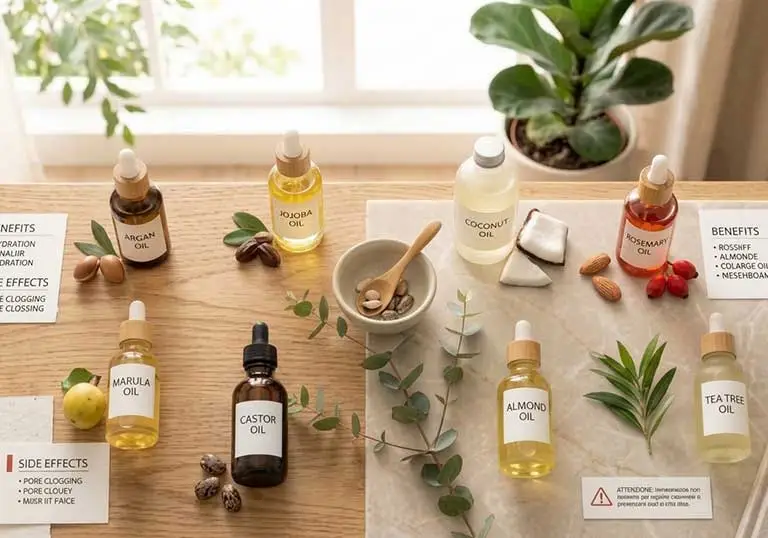
Oils for skin and hair were part of daily life long before creams, serums, and hair masks existed. Ancient civilizations used them for beauty and healing, and even in an age of skincare acids and hair products, we keep coming back to them. As soon as we notice a little hair fall, the first thing many of us do is google “best oil to stop hair fall.”
It makes sense. Oils are natural, and most of us believe they work. But do they really work for everyone? Natural does not automatically mean safe or right for you. An oil that works wonders for one person can be a poor match for your skin type or scalp, and it can even make existing concerns worse.
In this guide, I break down 8 popular, widely available oils (castor, olive, argan, pumpkin seed, rosemary, tea tree, rosehip, and black seed oil) so you can find out which ones suit your skin, hair, and scalp, and how to use them safely.
Quick Comparison: Best Oils for Skin and Hair at a Glance
| Oil | Best for | Use with caution if |
|---|---|---|
| Castor oil | Dry and mature skin, mild hair thinning, eyelashes and eyebrows | You have acne-prone or oily skin |
| Olive oil | Very dry skin, frizzy and brittle hair, split ends | You have acne-prone skin or fine, oily hair |
| Argan oil | Most skin types, frizz, flyaways, heat protection | You have a nut allergy |
| Pumpkin seed oil | Lightweight night-time hydration, hair-growth support (research is early) | You have a seed allergy |
| Rosemary oil | Mild hair thinning, acne and redness (always diluted) | You are pregnant, or have high blood pressure or epilepsy |
| Tea tree oil | Acne, dandruff, itchy scalp (always diluted) | You have sensitive skin or rashes; toxic to pets |
| Rosehip oil | Dullness, uneven tone, fine lines, smooth and shiny hair | You have a known allergy (rare) |
| Black seed oil | Acne, irritated skin, scalp health (diluted) | You are pregnant or take certain medications |
Carrier Oils vs Essential Oils: What’s the Difference?
Before we start, it helps to understand the difference between carrier oils and essential oils, because they are used very differently.
What are carrier oils?
Carrier oils are fat-based plant oils. They are non-volatile, which means they do not evaporate quickly, and they are used to dilute essential oils. Common examples include:
- Argan oil
- Coconut oil
- Olive oil
- Jojoba oil
- Pumpkin seed oil
- Rosehip oil
- Black seed oil
What are essential oils?
Essential oils are volatile, highly concentrated extracts from plants, flowers, and leaves. They should never be applied directly to the skin. They must always be diluted in a carrier oil first. Common examples include:
- Tea tree oil
- Rosemary oil
1. Castor Oil: Benefits for Skin and Hair
Castor oil is a thick, sticky oil made from the seeds (beans) of the Ricinus communis plant. Around 90% of its fatty acids come from ricinoleic acid, which gives it excellent moisturizing power. Raw castor beans contain a toxin called ricin, but this toxin does not carry over into the oil, so properly processed castor oil is safe for topical use.
Castor Oil for Skin
Castor oil is an emollient, so it is very good at locking moisture into the skin. It is also believed to have anti-aging benefits, although there is little scientific evidence for this. I have read many reviews from women who say it helped them keep firmer, plumper skin even in their late 60s, but these are personal experiences, not clinical proof. Because it is thick and heavy, it can clog pores in some people.
Castor Oil for Hair
Because of its thick consistency, castor oil should not be applied straight onto the scalp, as it can cause buildup. It is better to dilute it with a lighter oil such as olive oil or black seed oil. Many people report that it helps with hair regrowth, but there is not enough scientific evidence to confirm this. It is best known for use on eyelashes and eyebrows, where many people say it makes the hair look fuller and healthier.
Best Skin and Hair Types for Castor Oil
Castor oil is best for dry skin, since it moisturizes deeply, and for mature skin because of its reputed anti-aging effects. For hair, it works best if you have mild thinning or hair fall. It can make hair feel thicker and smoother, whether you use it on your scalp, eyelashes, or eyebrows.
Who Should Avoid Castor Oil?
If you have acne-prone or oily skin, it is best to avoid castor oil or at least do a patch test first. Avoid applying it undiluted to the scalp.
2. Olive Oil: Benefits for Skin and Hair
Almost every kitchen has a bottle of olive oil, but have you ever used it on your skin and hair instead of just for cooking? Pressed from fresh olives, it has excellent moisturizing properties and has been used for centuries for many different concerns.
Olive Oil for Skin
Olive oil is great for body massage. It is deeply moisturizing, so it works well on dry skin, leaving it hydrated and plump. It can also be used as a makeup remover.
Olive Oil for Hair
Olive oil is best for reducing frizz and split ends. It coats the hair strands, leaving hair soft and smooth, and it can help soothe an irritated, dry scalp.
Best Skin and Hair Types for Olive Oil
Olive oil is best for dry to very dry skin because of its deep moisturizing effect. It is also best for brittle and frizzy hair, as it helps tame the frizz.
Who Should Avoid Olive Oil?
Olive oil is mildly comedogenic, so it can clog pores and worsen acne. It can also feel heavy on fine or oily hair.
3. Argan Oil: Benefits for Skin and Hair
Argan oil is cold-pressed from the kernels of the argan tree’s fruit. The tree grows mostly in Morocco, which is why the oil is so closely linked with that country, and it is widely used in beauty and hair products.
Argan Oil for Skin
Argan oil gives deep hydration without usually clogging pores. It contains vitamin E and fatty acids, and its antioxidants help protect the skin from free-radical damage. It may also help improve skin elasticity, giving the skin a hydrated, glowing look.
Argan Oil for Hair
Argan oil is excellent for detangling and taming frizz and flyaways. The best thing about it is that it does not feel greasy or heavy: it hydrates the hair strands without leaving them oily. It also helps protect hair from styling tools and heat, and it can help soothe an itchy scalp.
Best Skin and Hair Types for Argan Oil
Because it is lightweight and usually non-clogging, argan oil suits most skin types. For hair, it is a good pick if you struggle with frizz, flyaways, or heat styling damage.
Who Should Avoid Argan Oil?
Because argan oil is cold-pressed from a nut-like kernel, anyone with a nut allergy should avoid it or do a patch test before use.
4. Pumpkin Seed Oil: Benefits for Skin and Hair
Pumpkin seed oil is extracted from pumpkin seeds. It is rich in omega-6 and omega-9 fatty acids, and it also contains some saturated fatty acids, along with vitamin E and other nutrients.
Pumpkin Seed Oil for Skin
Pumpkin seed oil is rich in vitamin E and has a lightweight texture, so it feels easy to apply. It has anti-inflammatory properties and contains a small amount of zinc, which may help relieve itchy skin. Applied at night, it leaves the skin hydrated and moisturized.
Pumpkin Seed Oil for Hair Growth
Pumpkin seed oil is one of the more promising oils for hair growth. It is believed to work by blocking DHT, the hormone linked to pattern hair loss, and it is anti-inflammatory too. In a small 24-week randomized trial of 76 men with androgenetic alopecia, those who took 400 mg of pumpkin seed oil daily by mouth saw about a 40% increase in hair count, compared with about 10% in the placebo group.
Keep in mind that this was a small study, it was done on men, and the oil was taken orally rather than applied to the scalp, so more research is needed.
Best Skin and Hair Types for Pumpkin Seed Oil
Its lightweight texture makes it a good choice if you want night-time hydration without heaviness, and if you are curious about natural support for hair thinning while research continues.
Who Should Avoid Pumpkin Seed Oil?
Anyone with a seed allergy should do a patch test first. Even though the oil is considered non-comedogenic, leaving it on the skin for too long can cause breakouts in some people.
5. Rosemary Oil: Benefits for Skin and Hair
Rosemary essential oil is made by steam distillation of the leaves and stems of the rosemary plant, and it is a volatile, highly concentrated compound. Homemade rosemary-infused oil is different: it is made by steeping rosemary in a carrier oil such as olive oil or jojoba oil.
Rosemary Oil for Skin
Everyone talks about rosemary oil for hair, but hardly anyone talks about what it can do for the skin. Its anti-inflammatory and antibacterial properties may help with acne, breakouts, redness, and irritation, although most of this evidence comes from lab studies. If you want to try it, dilute two to three drops of rosemary essential oil in about a tablespoon of carrier oil, or mix it into your moisturizer, and add it to your daily skincare routine.
Rosemary Oil for Hair Growth
Rosemary oil has gone viral for hair growth. It does not contain minoxidil, but in one small six-month study it gave results similar to 2% minoxidil in people with androgenetic alopecia, with less scalp itching. It is believed to stimulate blood flow to the scalp, which may support hair growth and strengthen the roots. Larger studies are still needed, and it has not been proven to stop hair shedding. A homemade rosemary-infused oil can also leave your hair feeling smooth and strong.
Best Skin and Hair Types for Rosemary Oil
Rosemary oil is worth trying if you have mild hair thinning or breakout-prone, irritated skin, as long as you dilute it properly.
Who Should Avoid Rosemary Oil?
Pregnant women, people with high blood pressure, and people with epilepsy should avoid rosemary essential oil or check with their doctor first.
6. Tea Tree Oil: Benefits for Skin and Hair
Tea tree oil has a very strong aroma but a wonderfully cooling effect. It is made by steam distillation from the leaves and twigs of a small tree called Melaleuca alternifolia. It contains terpinen-4-ol, which gives it antibacterial and anti-inflammatory properties. Despite its name, it has nothing to do with the tea we drink.
Tea Tree Oil for Acne and Skin
Here is my own experience. I had acne on my face all year round. Sometimes it was better and sometimes worse, but there were always one or two pimples on my chin and jawline. After I started using tea tree oil, my acne began to reduce, and my skin was clear for the first time in a very long while. Since it is an essential oil, it must be diluted. I mixed two to three drops into my daily moisturizer.
Tea tree oil is best known for helping with acne and irritation, and it may also help soothe insect bites, which makes it handy when travelling to tropical areas.
Tea Tree Oil for Dandruff and Scalp
Because it is anti-inflammatory and antibacterial, tea tree oil can help reduce dandruff and scalp itchiness. Add a few drops to a carrier oil and gently massage it into the scalp. It may also help remove buildup from styling products.
Best Skin and Hair Types for Tea Tree Oil
It is best suited to acne-prone skin and to a flaky, itchy, or dandruff-prone scalp, always diluted.
Who Should Avoid Tea Tree Oil?
People with sensitive skin or rashes should avoid tea tree oil. It should never be swallowed, and it is toxic to pets such as cats and dogs, so keep it out of their reach.
7. Rosehip Oil: Benefits for Skin and Hair
Rosehip oil is cold-pressed from the seeds and fruit of wild rose bushes. It is high in fatty acids such as omega-6, omega-3, and omega-9, and it is rich in antioxidants and vitamins A and E. Thanks to its anti-inflammatory and antioxidant properties, it is widely used in both skincare and hair care.
Rosehip Oil for Skin
Rosehip oil is rich in the fatty acids linoleic and linolenic acid, which is why it is considered a natural barrier-repair ingredient and a deeply hydrating moisturizer. It has a lightweight, non-greasy texture and a low comedogenic rating, so it suits many skin types. Applied regularly, it can reduce dullness and help even out skin tone.
It also contains a small amount of trans-retinoic acid, a vitamin A derivative that may help boost collagen and skin elasticity. Some small studies and many user reviews report a visible reduction in fine lines and wrinkles.
Rosehip Oil for Hair
Rosehip oil acts as a natural conditioner. It smooths the hair cuticles, tames frizz, and adds shine, making hair glossier and smoother. It can help reduce breakage and split ends, and it moisturizes the scalp, which helps with dryness and itchiness. In my own experience, my hair felt much smoother and softer after using rosehip oil, and it was easier to manage.
Best Skin and Hair Types for Rosehip Oil
Rosehip oil suits most skin types, especially dull or uneven-toned skin, and it works well on dry, frizzy hair that needs shine and smoothness.
Who Should Avoid Rosehip Oil?
Rosehip oil is generally well tolerated, but allergies and breakouts can happen in rare cases, so a patch test is a good idea before you start.
8. Black Seed Oil: Benefits for Skin and Hair
Black seed oil is cold-pressed from Nigella sativa seeds. Its main active compound is thymoquinone, which gives it anti-inflammatory and antioxidant properties. It is used topically, and some people also take it orally, though that should be discussed with a doctor first.
Black Seed Oil for Skin
Its anti-inflammatory and antioxidant properties may help reduce acne and breakouts and calm irritated, itchy skin. Early research also suggests it may support wound healing and skin repair, but the evidence is still limited. Applying two to three drops in a carrier oil or moisturizer as part of your daily routine is enough.
Black Seed Oil for Hair
Some small studies suggest that black seed oil can improve scalp blood flow and support hair health, which may help with hair thickness and shine. In my own experience, I have used black seed oil on my hair and noticed improvements in growth and thickness.
Best Skin and Hair Types for Black Seed Oil
It is worth considering if you have breakout-prone or irritated skin and thinning or dull hair, used diluted and consistently.
Who Should Avoid Black Seed Oil?
If it is not diluted or used properly, black seed oil can cause reactions such as itching and redness. Pregnant women, and anyone taking medication (especially for diabetes, blood pressure, or blood thinning), should speak to their doctor before using it.
Which Oil Is Best for Your Skin and Hair Type?
There is no single “best” oil for everyone. The right oil depends on your skin type, hair type, and scalp condition.
- Dry skin and dry or frizzy hair: heavier oils like castor and olive oil, though they can clog pores on acne-prone skin.
- Most skin types: lighter oils like argan and rosehip oil are gentler.
- Acne, dandruff, or thinning hair: tea tree, rosemary, and black seed oil can help, but use them carefully and always diluted because of how potent they are.
Whichever oil you choose, always do a patch test first, dilute essential oils in a carrier oil, and be patient. Hair and skin changes take time, and results vary from person to person. Natural does not always mean safe, so listen to your skin and scalp, and stop using any oil that irritates you.
I hope this guide helps you pick the right oil for your routine. If you have tried any of these oils, I would love to hear about your experience in the comments.
Frequently Asked Questions (FAQs) About Oils for Skin and Hair
Can I apply essential oils directly to my skin?
No. Essential oils are highly concentrated and can cause burning, redness, and allergic reactions. Always dilute them in a carrier oil or moisturizer first.
How do I do a patch test for oils?
Apply a small amount of the diluted oil to your inner forearm or behind your ear and leave it for 24 hours. If you notice no redness, itching, or irritation, it is generally safe to use.
Which oil is best for hair growth?
No oil can guarantee hair growth. Rosemary, pumpkin seed, and black seed oil have some research behind them, but the evidence is still limited. If you have noticeable hair loss, see a dermatologist to find the underlying cause.
Which oils are best for acne-prone skin?
Lighter oils such as rosehip and argan oil, and diluted tea tree oil, tend to suit acne-prone skin better. Heavy oils like castor and olive oil are more likely to clog pores.
How often should I use these oils?
For skin, most people use a few drops once a day, usually at night. For hair, oiling once or twice a week and washing it out after a few hours is enough for most people. Start slowly and see how your skin and scalp react.
Can I mix different oils together?
Yes. Mixing a thick oil like castor with a lighter oil like olive or argan makes it easier to apply. You can also add a few drops of an essential oil to a carrier oil. Just keep the essential oil dilution low.
How long do oils take to show results?
Skin benefits like hydration can show within days or weeks. Hair growth is slower, and you usually need at least three to six months of consistent use before judging results.
Are these oils safe during pregnancy?
Not all of them. Essential oils such as rosemary, and black seed oil in particular, are usually advised against during pregnancy. Always check with your doctor before using any new oil.
Disclaimer
This blog is for informational purposes only and is not medical advice. It is based on my personal experiences and research, and results can vary from person to person. Please consult a dermatologist or a qualified healthcare professional before trying any new product, especially if you are pregnant, breastfeeding, have allergies or a medical condition, or are taking medication.
