Disclaimer: This blog is based on my personal research and experimenting (reading ingredient lists and my own experience). I am not a dermatologist or a doctor, and this is not medical advice. Every skin type is different, so what works or doesn’t work for my skin may not be the same for yours. Please patch test any new product before using it, and if you have acne, allergies, eczema or any other skin condition, or if you are pregnant or breastfeeding, talk to a dermatologist or doctor first. Prices and ingredient lists can change over time and vary by store, so please check the current list before you buy.
Introduction
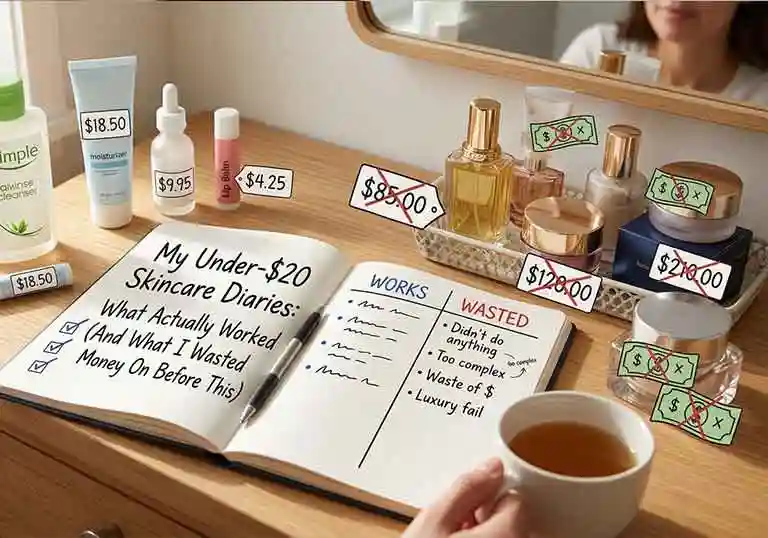
Many of us believe that the more expensive a skincare product is, the better the results will be. And by expensive, I mean really expensive: luxury brands where a single product costs $300 or more. I’m not saying these products are bad. I’m saying that instead of spending $300 on one product, we could spend that money elsewhere, especially since similar key ingredients can often be found in a $20 product too. So the question is: what are we actually paying for? Is it just the packaging, or is it that we don’t have the time to read an ingredient list?
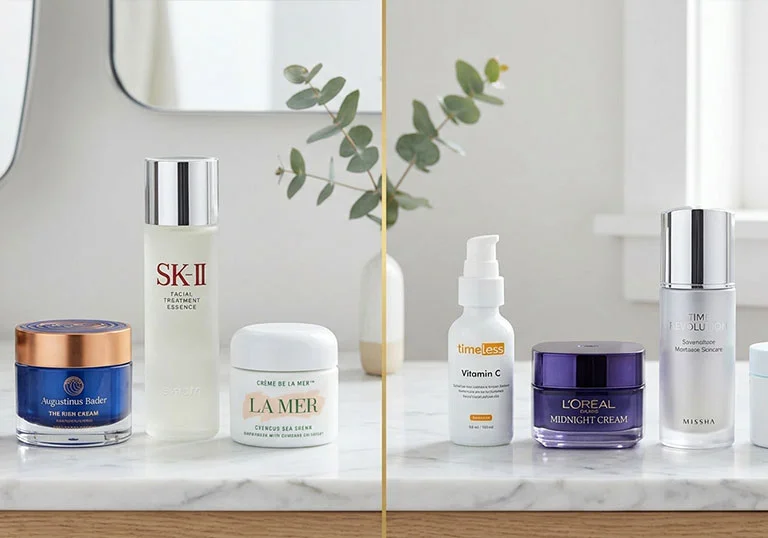
In this blog, I review some popular luxury skincare products and mention budget-friendly dupes for each of them.
Please note that I haven’t bought all of these products. I checked their ingredient lists on Sephora and Ulta Beauty. In today’s internet age, ingredient lists tell us a lot, so it’s much harder for brands to fool us with marketing. But keep one thing in mind: an ingredient list tells you what is in a product, not how much of it is in there or how well the formula is made. That’s why a dupe is never “exactly the same”, only similar. Prices mentioned are US retail prices and may vary by store.
Crème de la Mer
Let’s start with the price: this moisturizer is 2 oz (60 ml) and costs $390. Its first ingredients are algae (seaweed) extract, mineral oil, petrolatum and glycerin. Mineral oil and petrolatum are occlusives, meaning they lock moisture into the skin, and glycerin is a humectant that helps hydrate the skin. Glycerin is good for almost every skin type, not just mature skin.
It also contains denatured alcohol (alcohol denat.), which can dry out or irritate some people’s skin, especially sensitive skin. However, it sits quite low on the ingredient list, which suggests the amount is probably small. The cream also contains fragrance and fragrance allergens (such as limonene and linalool), which can be a problem for sensitive skin. It is a rich, heavy formula, so it may feel too much for oily or acne-prone skin.
In my opinion, instead of spending this much on one cream, we can look at alternatives that hydrate the skin and support the skin barrier.
Dupes: In my opinion, the best options are Aestura Atobarrier 365 Cream and La Roche-Posay Cicaplast Baume B5. Their ingredients help support the skin barrier and keep skin hydrated and smooth, and best of all, they are budget friendly.
Augustinus Bader The Retinol Serum
This 15 ml serum costs $200. The brand has not publicly shared the exact percentage of retinol. Retinol sits quite low on the ingredient list, which suggests the amount may be small, but that is only an estimate, not a confirmed fact. According to the brand, the serum is hydrating and soothing. If the retinol amount is low, the visible effect on wrinkles and fine lines may also be limited.
For retinol in general, it is usually recommended to start with a low strength and increase gradually as your skin adapts. Use retinol at night, wear sunscreen during the day, and talk to your doctor before using retinol if you are pregnant or breastfeeding.
Dupes: Celimax and Paula’s Choice retinol products are good options, since many of them state the retinol strength so you can choose what suits your skin. Dermatologists generally recommend retinoids for anti-aging and acne, but this is not a recommendation of any specific brand.
Sisley Supremÿa At Night The Supreme Anti-Aging Skin Care
The packaging of this cream is truly luxurious, and that was my first impression too. It is a 50 ml cream, and the price varies a lot by store (roughly $700 to $1,000; I saw it at around $800). But not everything that glitters is gold.
As for the ingredients, it contains shea butter, squalane, glycerin, centella asiatica and adenosine. Centella asiatica is commonly used to soothe skin, and adenosine is used to help skin look smoother and to support anti-wrinkle care. The cream is softening and moisturizing, but it also contains essential oils and fragrance components (such as rose and geranium), which can irritate sensitive skin.
Dupes: In my opinion, this price is not justified, because even around $20 you can find hydrating products that give fairly similar results. Look for creams with ingredients like centella and adenosine, preferably fragrance-free.
Estée Lauder Advanced Night Repair
This is a classic, original product. We have all seen our mothers using this serum. The 1.7 oz (50 ml) bottle costs around $125 to $130. It is a good product: it hydrates deeply thanks to hyaluronic acid and helps skin look plumper, while the brand says Tripeptide-32 helps reduce the appearance of fine lines. It is especially good for dry skin.
The brand describes it as non-comedogenic and suitable for all skin types, but my own experience was different. I have acne-prone skin, and I broke out after using it only three times. This is a personal experience, and your skin may react differently, because every skin is different. Still, if your skin is acne-prone or you get hormonal breakouts, please patch test first.
Dupes: Anua PDRN Hyaluronic Acid Capsule 100 Serum or The Ordinary Hyaluronic Acid 2% + B5. They feel lighter on the skin, are hydrating, and suit dehydrated and dry skin.
ZO Skin Health 10% Vitamin C Self-Activating
This 50 ml bottle costs around $108 to $112, which in my opinion is a lot for a vitamin C serum. Now let’s talk about the ingredients. It contains 10% ascorbic acid (pure vitamin C) and tetrahexyldecyl ascorbate (a stable form of vitamin C), which can help reduce the appearance of dark spots and discoloration.
The turn-off for me is the fragrance components in it (such as bitter orange peel oil, limonene and citral). I believe scent is meant for clothes, not for skin. Fragrance can cause irritation or an allergic reaction (contact dermatitis) in some people, so fragrance-free options may be better for sensitive skin.
Dupes: Dr.Althea and CeraVe vitamin C serums. Please check the ingredient list before buying, because Dr.Althea’s Vitamin C Boosting Serum also contains orange peel oil and limonene. If you want to avoid fragrance, look at Dr.Althea’s Gentle Vitamin C Serum instead.
Guerlain Orchidée Impériale The Cream
The packaging is really cute, but the jar is small. It is only 50 ml, and it costs around $500. When we look at the ingredients, it contains emollients like squalane, glycerin and caprylic/capric triglyceride, which help keep skin soft and smooth. It also contains orchid extract, which the brand promotes for skin longevity and firmness, but those claims are based on lab (in vitro) tests, not a guarantee of real-life results. It also contains parfum (fragrance).
Dupes: I compared the ingredients and looked for a cream that does a similar job. I found the e.l.f. Skin Holy Hydration! Face Cream, which costs around $12 to $15. It is a budget-friendly alternative for hydration, but the texture and glow will not be exactly the same.
Honest Verdict
In my opinion, we can spend as much as we like on skincare, but we cannot reverse time. Some products really do make a real difference to the skin, but I don’t think that difference is worth $1000. We can spend that same $1000 on something much better. Paying $1000 for something we can get for $100 is like having the money but not the awareness.
Remember, no cream, expensive or cheap, can completely erase wrinkles. Wearing sunscreen every day is the most important anti-aging habit.
Who Should Buy $1000 Skincare Products?
People who enjoy luxury skincare as an experience and for whom the cost isn’t a burden, or people who simply want to experiment. But remember that packaging and fragrance do not benefit your skin; what really matters is the ingredients and whether they suit your skin. So before applying any product, make sure you know what you are putting on your face.
FAQs
1. Are these products bad for the skin?
Not necessarily. These products are not bad; their price just feels too high for what the ingredients offer. Some contain fragrance, which can irritate sensitive skin.
2. Are these products suitable for my skin type?
It depends on your skin. Dry skin may like rich creams, while oily or acne-prone skin may break out from heavy or heavily fragranced products. Patch test any new product, and talk to a dermatologist if you have a skin condition.
3. Do dupes really work as well as the originals?
Dupes often share similar key ingredients and can do a similar job, but the formula, concentration, texture and fragrance may differ, so they are not “exactly the same”. Still, for basics like hydration and barrier support, budget products are often a good option. Results can vary from person to person.